Vangst
Designing clarity in a complex, regulated marketplace
Role: Chief Product & Design Officer

Overview
My role was to simplify the system at its core: clarify user intent, streamline flows, and make complex industry constraints feel intuitive.
I led the redesign of Vangst’s marketing website and streamlined the marketplace experience, a two-sided platform connecting cannabis companies with talent across temporary and full-time roles.
Operating in a highly regulated, state-by-state industry, the platform had grown quickly to over 100,000 users—but the product experience hadn’t kept pace. Users struggled to navigate workflows, understand requirements, and complete key actions like hiring or applying.
The Problem
The marketplace was doing a lot—but not clearly.
Employers and candidates were funneled through overlapping, unclear paths
Key actions like posting a job or applying required too many steps
Regulatory complexity (state-by-state cannabis laws) created confusion and friction
The platform lacked a cohesive structure across personas, leading to inconsistent experiences
As a result, users were dropping off in critical flows, and the product struggled to scale effectively with demand.
Opportunity
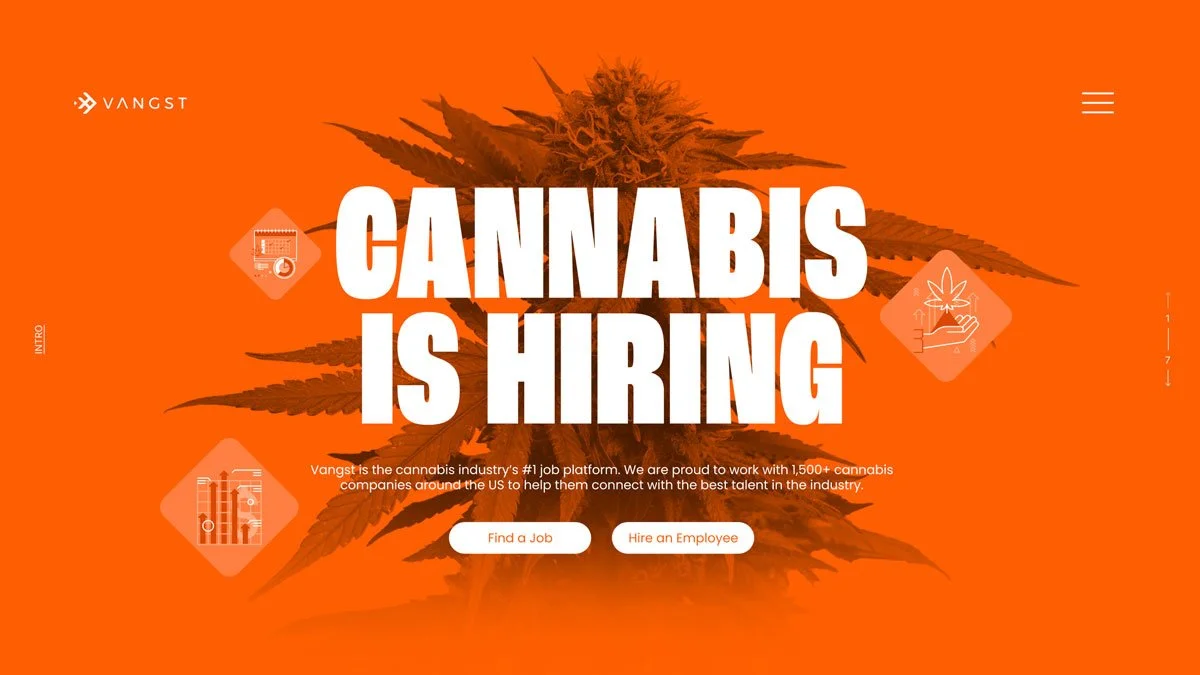
Reframe the product around a simple idea:
People come to Vangst to do one of two things:
Hire or Get Hired
By aligning the entire experience around this core intent, we could reduce friction, improve conversion, and create a foundation for future growth—including automation and AI.
Approach
1. Re-architect the experience around user intent
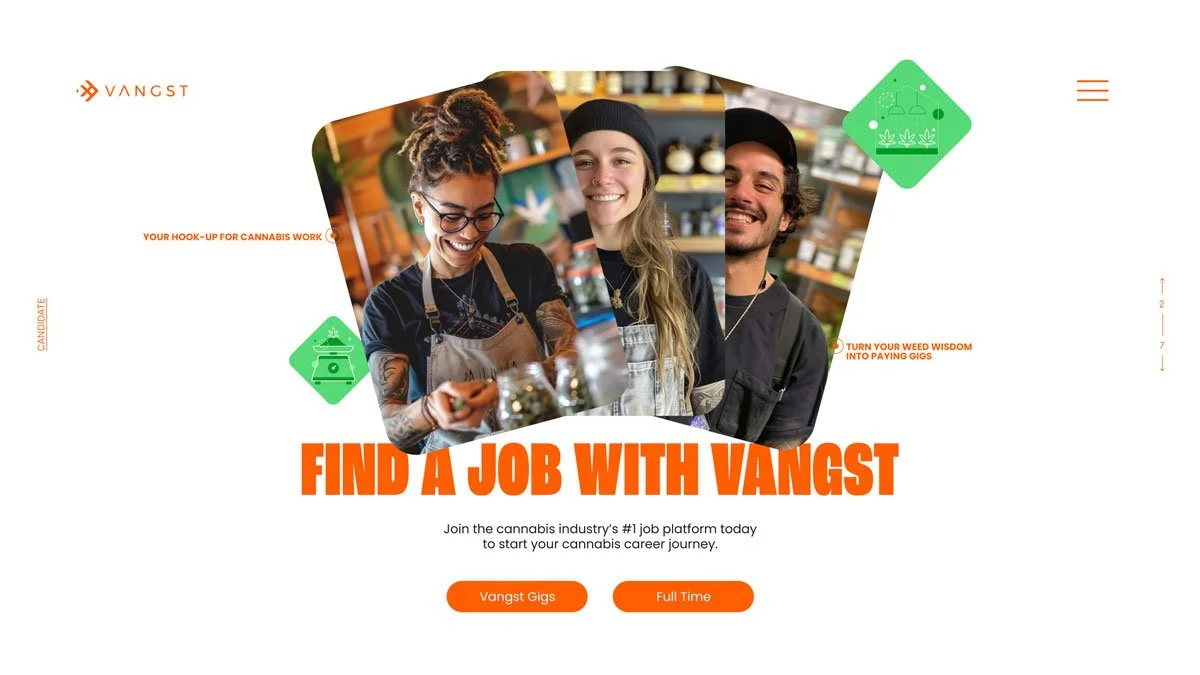
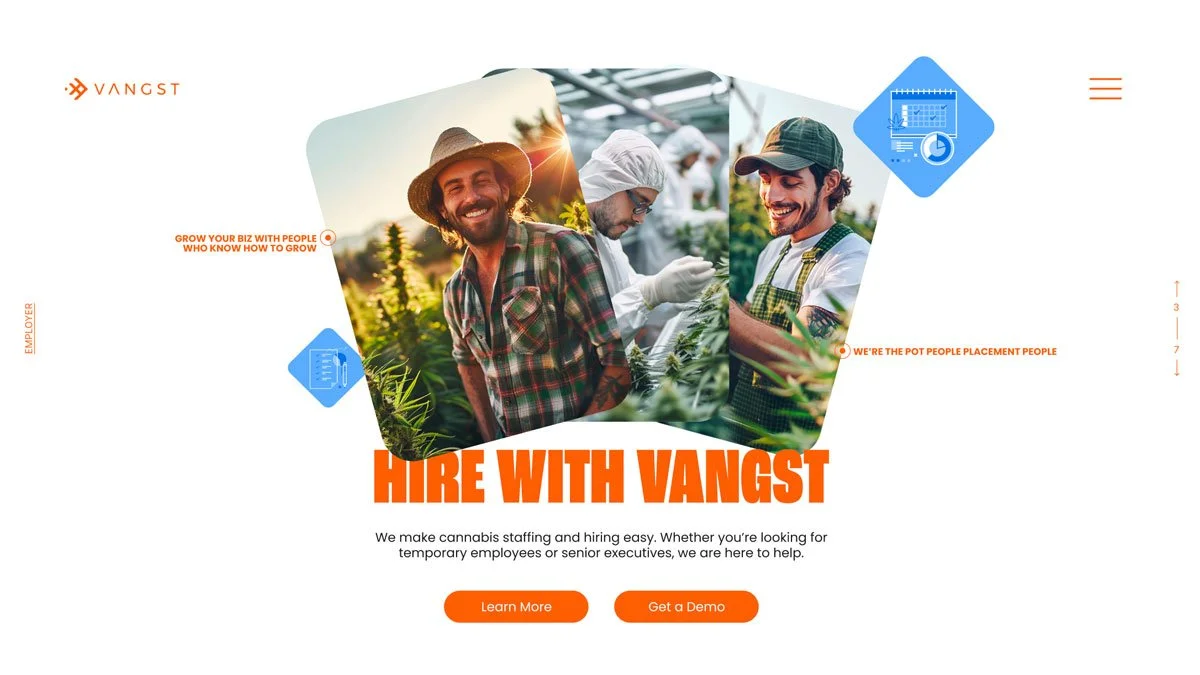
I redesigned the website to clearly separate and prioritize two primary journeys:
For companies: hiring, managing roles, and finding candidates
For candidates: discovering opportunities and applying seamlessly
This created a more intuitive entry point into the product and reduced cognitive load across the board.
2. Simplify multi-persona workflows
The platform supported multiple roles—recruiters, hiring managers, and job seekers—each with different needs.
I mapped and streamlined these workflows end-to-end, removing unnecessary steps and clarifying transitions between actions.
The result was a system that felt cohesive rather than fragmented.
3. Turn regulatory complexity into a product advantage
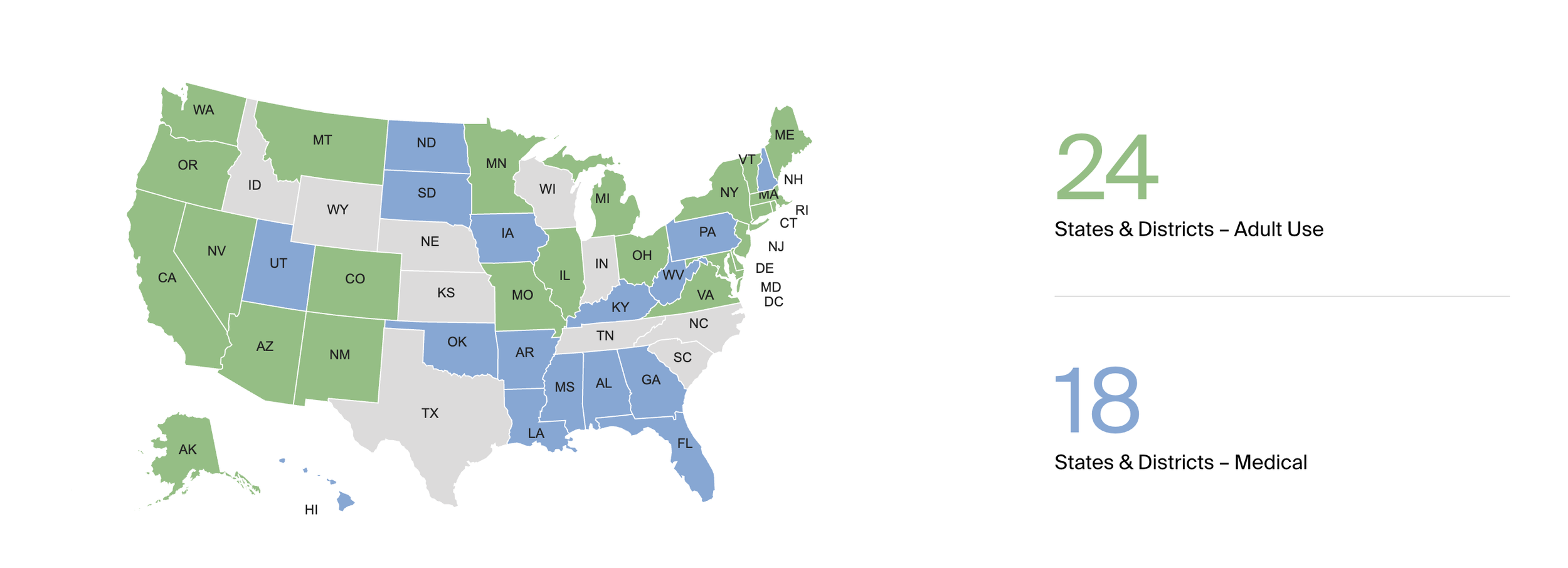
Cannabis hiring is uniquely complex due to varying laws by state.
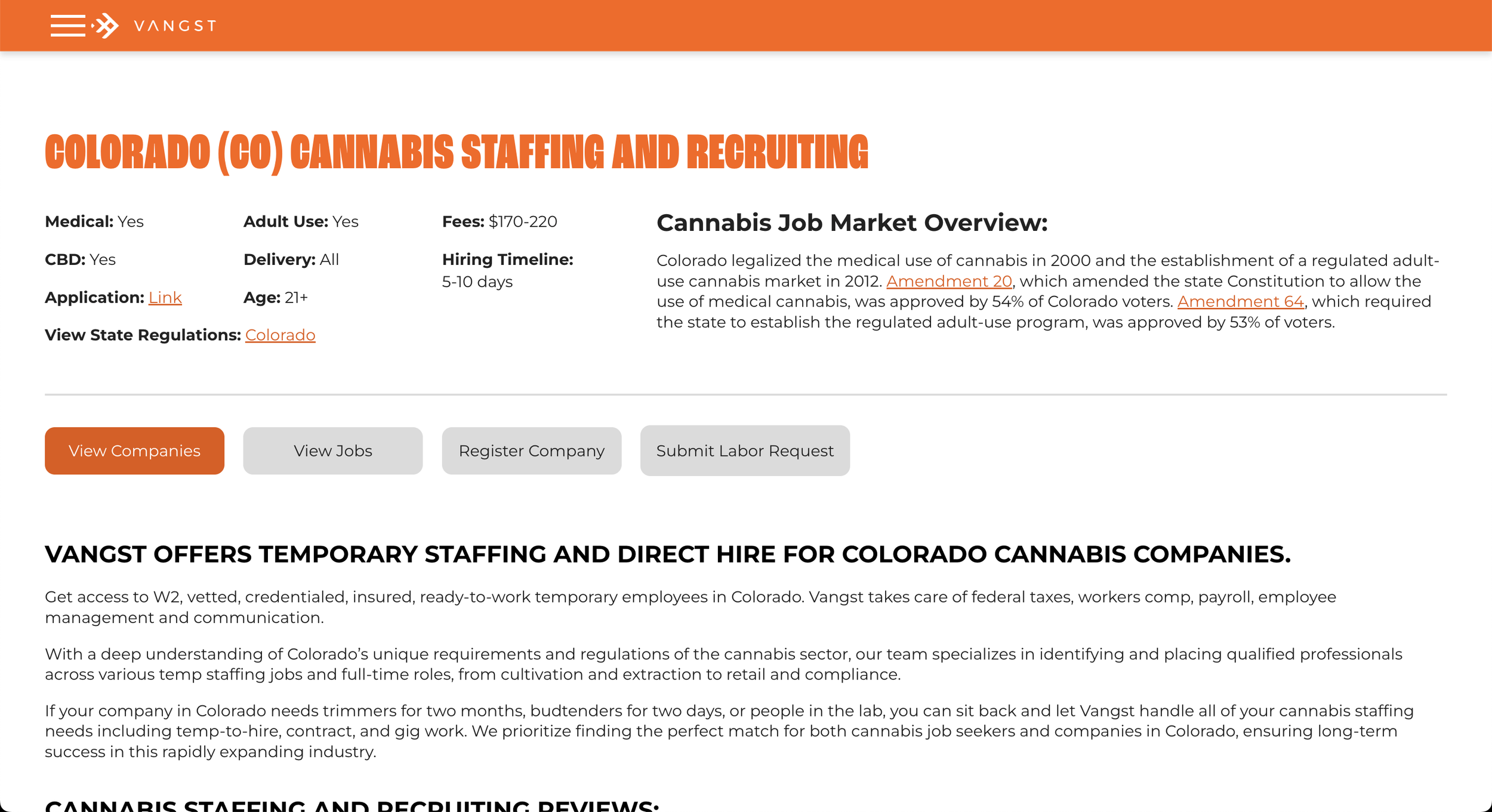
I designed an interactive state-by-state regulatory system that allowed users to:
Understand hiring requirements instantly
Explore compliance rules by location
Make informed decisions without leaving the platform
Instead of being a blocker, compliance became a differentiating feature.
4. Improve conversion through clarity and flow
Across key marketplace actions—job posting, candidate discovery, and applications—I focused on:
Reducing steps and decision fatigue
Making next actions obvious
Creating clearer feedback loops for users
This helped drive more successful outcomes on both sides of the marketplace.
5. Design for what comes next
While improving the current experience, I also helped lay the groundwork for future evolution. This included early thinking around AI-enabled workflows that would later become central to Pikl—an AI-native staffing platform spun out of Vangst.
Impact
Streamlined core marketplace flows across a 100K+ user platform
Improved clarity and usability for both employers and candidates
Increased efficiency in key actions like job posting and applications
Transformed complex regulatory information into an accessible product feature
Established the product foundation for the spinout of Pikl, extending the platform into AI-driven staffing
What I Learned
Designing for a regulated marketplace reinforced a core principle in my work:
Complexity isn’t something to hide—it’s something to translate.
By structuring the experience around real user intent and making constraints visible but understandable, we were able to turn friction into clarity—and create a system that could scale.