Vicki's Fresh Food Movement
Vicky’s Fresh Food Movement — From Google Form Orders to Scalable eCommerce
Summary
While running my creative firm, How Collaborative, I partnered with Vicky’s Fresh Food Movement, a direct-to-consumer local grocery delivery service, to evolve their early ordering model into a scalable eCommerce experience.
At the time, customers placed weekly orders by selecting pre-packaged grocery baskets through a Google Form, grouped by dietary preference. After using the service myself and validating user feedback through a quick community poll, I identified a key usability gap: customers wanted more control over what they received, even within a chosen diet type.
I designed and built a Shopify-based ordering experience that preserved operational simplicity while adding meaningful personalization—resulting in a 25% increase in average weekly order value, improved customer satisfaction, and clearer demand signals for the operations team.
Role: Product Designer + Builder (UX strategy, UI design, Shopify implementation)
Client: Vicky’s Fresh Food Movement
Context: Direct-to-consumer grocery delivery
Platform: Shopify (responsive web)
Outcome: +25% average weekly order value
The Starting Point
Vicky’s Fresh Food Movement had a strong concept and loyal early customers, but the ordering flow was constrained:
Customers ordered via a Google Form
They selected from weekly pre-packaged baskets
Basket options were grouped by dietary preference
(e.g., vegetarian, keto, gluten-free—depending on the week)
This model was operationally lightweight, but it limited user agency and made the experience feel rigid as customer expectations grew.
The Problem
The early basket model worked for initial traction, but it introduced a core experience issue:
Customers wanted more control—especially the ability to tailor what they received—without losing the simplicity of ordering around dietary preferences.
This wasn’t just a UX issue. It also created downstream operational challenges:
Less predictable demand for specific items
More friction in procurement planning
Limited opportunities to increase order value
Goals
We aligned on three goals for the next version of the ordering experience:
Increase customer satisfaction
Give customers the flexibility to get what they actually want.Improve revenue per order
Increase average weekly order value through personalization and add-ons.Preserve operational simplicity
Avoid introducing complexity that would slow packing, delivery, or procurement.
Discovery & Insight
I approached this as both a designer and a user.
What I did
Personally used the service to experience the ordering flow end-to-end
Ran a quick community poll to validate sentiment
Synthesized feedback into a clear behavioral insight:
Key insight
Even when customers choose a dietary preference, they still want a sense of agency—the ability to customize their weekly order and add items they’re excited about.
Hypothesis
My hypothesis was straightforward:
If customers can customize their weekly order—in addition to selecting a basket—they’ll feel more satisfied, order more, and engage more frequently.
This would also benefit the business by creating better visibility into what people actually want each week.
Solution
I designed and implemented a Shopify-based eCommerce experience that balanced flexibility with operational constraints.
Core design move: keep baskets, add customization
Instead of replacing the existing basket model, I introduced a hybrid ordering system:
✅ Pre-packaged baskets remained (for simplicity and reliability)
✅ A new product listing page showcased all available local goods
✅ Customers could build their own order with add-ons and swaps—without breaking the kitchen/packing flow
This approach delivered personalization while still protecting the operational backbone of weekly fulfillment.
Key UX Decisions (and why they mattered)
1) Preserve familiar ordering behavior
Customers already understood the “weekly basket” pattern. Removing it would introduce risk and confusion. So the design kept the basket as the anchor—and expanded from there.
2) Introduce a flexible “shop add-ons” mental model
By adding a product listing page, customers could browse and add local items that matched their needs or preferences that week. This created a natural path to higher order value without feeling pushy.
3) Make operations smarter, not harder
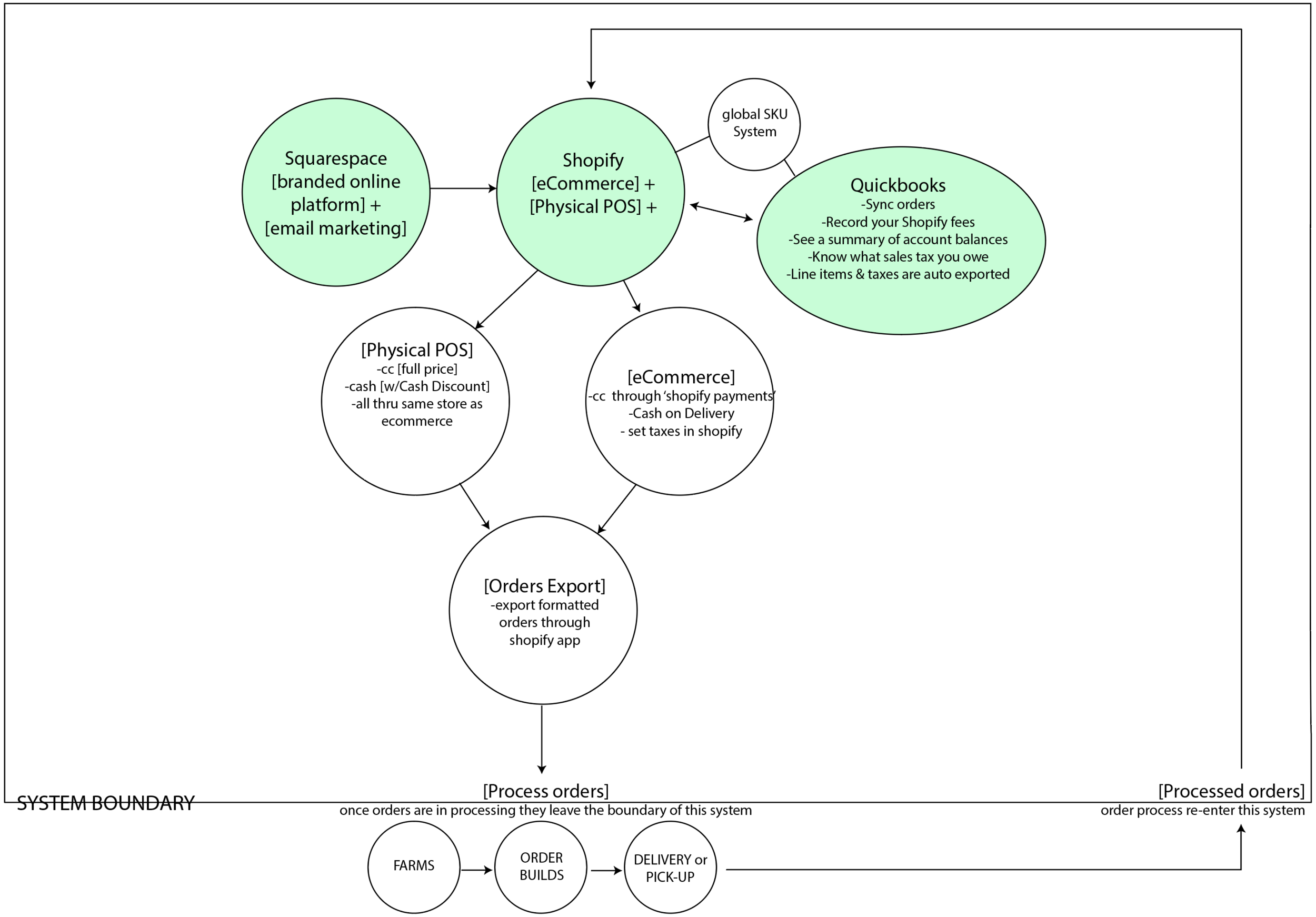
The Shopify catalog and weekly ordering structure improved internal clarity:
clearer demand signals
better procurement forecasting
reduced ambiguity week-to-week
Implementation
I delivered end-to-end execution across design and build:
UX flow design and ordering structure
Shopify storefront setup and configuration
UI design aligned to a clean, local, DTC aesthetic
Product and basket architecture for weekly cadence ordering
This allowed the team to move quickly without requiring custom engineering.
Results
The new ordering experience improved both customer outcomes and business performance:
+25% increase in average weekly order value
Higher customer engagement driven by personalization and browsing
Reduced operational friction by giving the production team clearer demand signals for weekly procurement
What I Learned
This project reinforced a principle I come back to often:
Small UX changes that increase user agency can drive meaningful lifts in satisfaction and revenue—especially when they’re thoughtfully aligned with operational constraints.
Giving customers more control didn’t require rebuilding the business. It required designing flexibility into the existing model.
What I’d Do Next (if extending the work)
If we continued iterating, the next highest-impact opportunities would be:
Quick reorder + “repeat last week”
(reduce friction for returning customers)Dietary preference tagging + smarter recommendations
(make add-ons feel curated, not overwhelming)Item limits / fulfillment guardrails
(ensure customization stays operationally smooth)Delivery subscription / membership model
(increase retention and predictability)